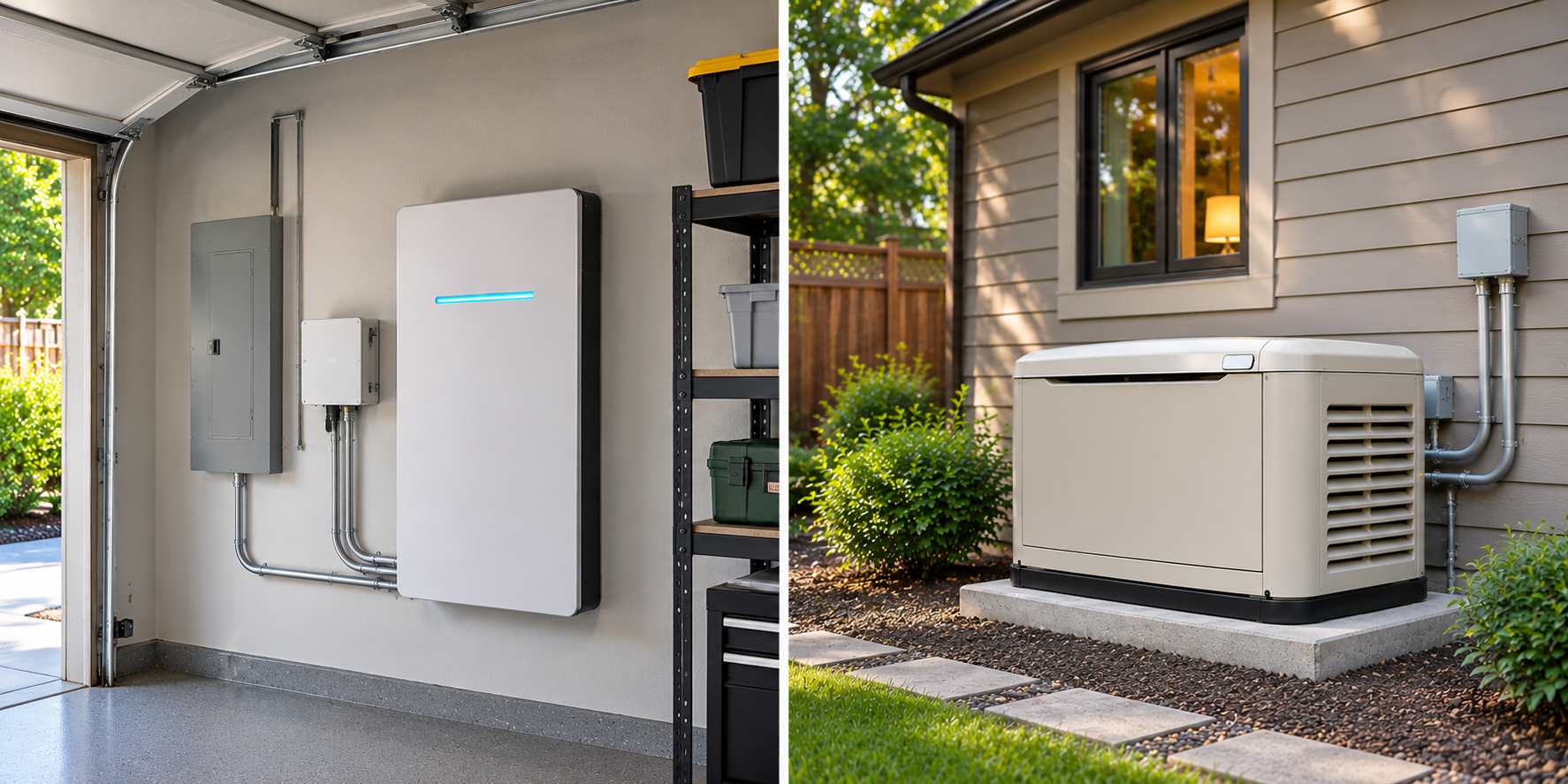
When a Sierra storm or high-desert wind knocks out power, the first question is rarely “Which brand should I buy?” It is “Will this keep the important things running long enough?” For homeowners in Reno, Sparks, Carson City and surrounding communities, winter cold adds a second challenge: an outage can affect heat, communications and equipment that protects the home from freezing. Use these seven questions before spending money on backup power.
1. Which loads are truly essential in your house?
Write down the must-haves: a phone, internet equipment, refrigerator, selected lights, and any electrically powered medical device. Then consider what is specific to your property. A home with a well pump, sump pump, electric ignition for a heating system or a critical circulation pump may need far more power than a home on city services. A gas furnace still often needs electricity for its blower and controls. Do not assume a small battery will run central heat simply because the fuel is natural gas.
2. What are the starting watts and the daily energy needs?
Check appliance labels and manuals. Watts describe how much power equipment draws at a moment; watt-hours describe how much energy it uses over time. For example, a 20-watt router used for ten hours needs roughly 200 Wh before losses. A pump or refrigerator can require a much larger momentary startup surge than its running draw. Make a table of watts, expected hours, and startup requirements. If you cannot find a rating, ask an electrician to measure it rather than guessing.
3. How long could you realistically be without power?
A rechargeable portable power station can be useful for phones, a router and lights, with quiet indoor operation where the manufacturer permits it. Its stored energy eventually runs out, and recharging may be difficult during several cloudy days. A portable fuel generator can support higher loads for longer if you have fuel, a safe outdoor site and a way to operate it. A permanent battery or standby generator may make sense for households with larger or automatic backup needs. Compare useful runtime at your specific load—not the manufacturer’s most favorable test.
4. Will the system work in your winter conditions?
Northern Nevada homes may see freezing temperatures, snow and wind. Ask where the equipment will be stored and operated, how temperature affects battery charging and discharge, and whether cords can be used safely without exposure to snow, standing water or foot traffic. Never operate a combustion generator inside a garage, under a carport or near an open door. The CDC recommends at least 20 feet of outdoor separation from doors, windows and vents, with exhaust pointed away. Install working carbon-monoxide alarms.
5. How will the power reach your appliances?
A small battery may let you plug devices directly into its outlets. Supplying house circuits is different. Do not connect a portable generator to a household receptacle or improvise a “suicide cord”; backfeeding can endanger line crews and neighbors. For a transfer switch, interlock or permanent installation, hire a properly licensed electrician who can address local permitting and inspection requirements. Ask the contractor to list exactly which circuits are backed up, including any 240-volt loads.
6. What is the full ownership cost?
Request apples-to-apples quotes that include equipment, electrical work, permits, delivery, maintenance, fuel or charging arrangements, warranties and any eventual battery replacement. Ask whether the solution starts automatically or requires someone to be home. A portable generator may cost less up front but demands fuel, safe placement and upkeep. A battery can be quiet and low-maintenance, yet its capacity and recharge plan may limit multi-day use. The right choice depends on your priorities, not a single price tag.
7. What is your backup plan if the backup fails?
Test the equipment before winter, keep the manual accessible, and make a plan for vulnerable household members. NV Energy’s Green Cross program offers outage-related communication for customers who rely on life-support equipment, but enrollment does not prevent an outage or guarantee uninterrupted power. If someone depends on powered medical equipment, coordinate a medically appropriate contingency plan and an alternate safe location. Keep emergency lighting, water, warm clothing and a way to receive outage alerts.
A practical two-tier plan can save money. Tier one keeps communications, essential lighting and medical needs covered immediately. Tier two adds the larger equipment—such as a furnace blower or well pump—only if your home requires it and a licensed electrician confirms the load. Ask vendors for a written demonstration, not just a sales brochure. For cold-weather households, confirm how equipment starts, charges and performs at the temperatures where it will be stored. Keep fuel and batteries according to manufacturer guidance, and make sure a responsible adult can operate the system safely even when the weather is poor.
THE DECISION: Before you request quotes, circle your three most important loads and estimate how many hours they must run. Then ask each vendor to show you a written load-and-runtime plan. That simple exercise can prevent the expensive mistake of buying a system that is either too small—or far more than you need.
Additional Resources
• NV Energy — Power Safe NV / outage preparedness and generator safety: https://www.nvenergy.com/safety/wildfire
• NV Energy — Green Cross (life-support equipment program): https://www.nvenergy.com/account-services/assistance-programs/green-cross
• CDC — Carbon Monoxide Poisoning Basics: https://www.cdc.gov/carbon-monoxide/about/index.html
• FEMA / Ready.gov — Power Outage Hazard Information: https://www.ready.gov/sites/default/files/2024-03/ready.gov_power-outage_hazard-info-sheet.pdf
• Consumer Reports — Generator Buying Guide: https://www.consumerreports.org/home-garden/generators/buying-guide/