
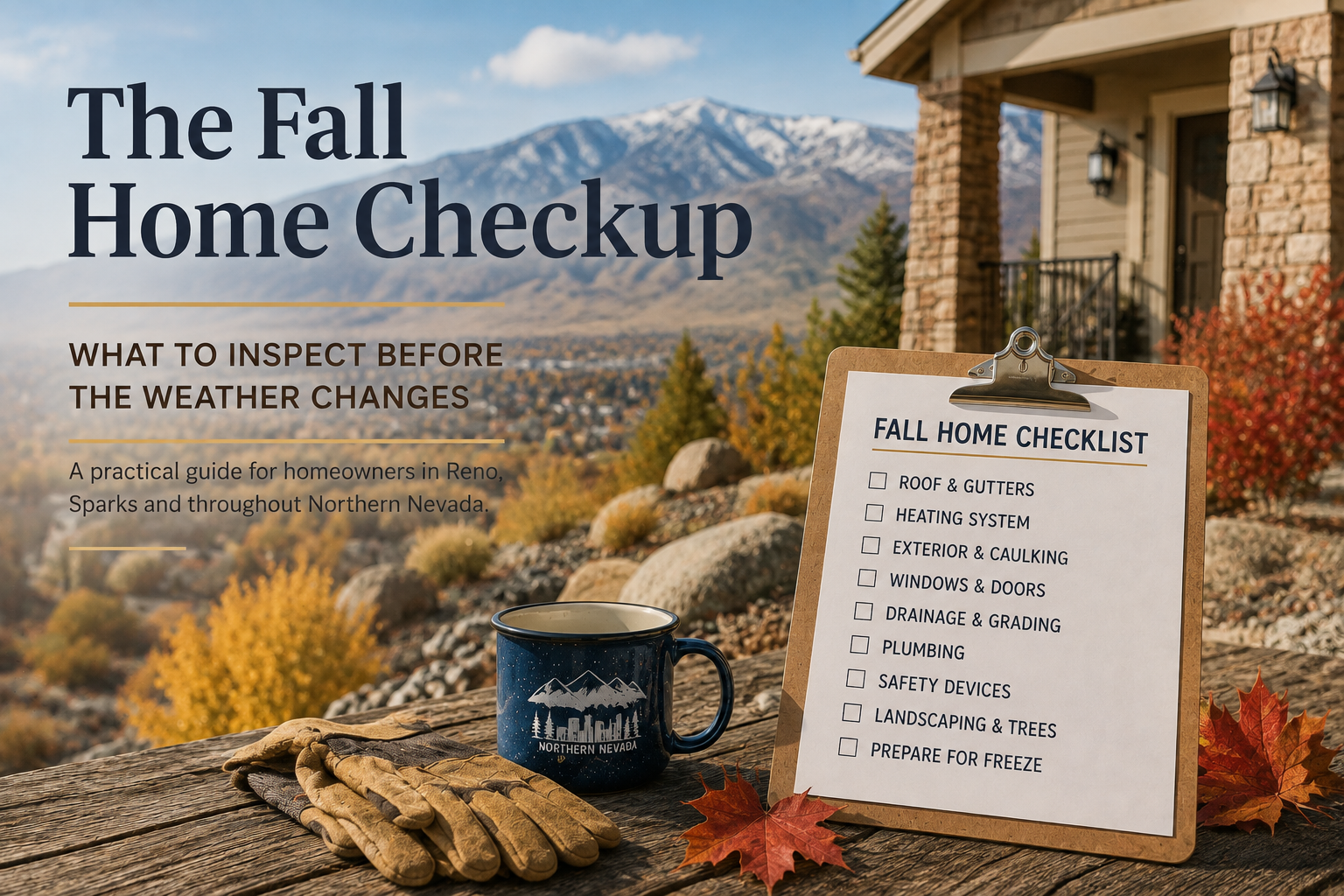
The Fall Home Checkup: What to Inspect Before the Weather Changes
Quick Answer
Fall is an important maintenance window for Northern Nevada homeowners because warm late-summer days can quickly give way to cold nights and freezing temperatures. Prioritize heating-system readiness, exterior plumbing and irrigation, roofing and drainage, weather sealing, safety equipment, and exterior conditions that could worsen through freeze/thaw cycles.
You don't need to winterize everything at once. Start with anything involving safety, water, freezing temperatures, or weather exposure, then schedule preventive maintenance before colder weather makes small problems more difficult to address.
Why Fall Deserves More Attention Than the Calendar Suggests
September in Northern Nevada can be deceptive.
An afternoon in Reno, Sparks, or Carson City can still feel like summer while nighttime temperatures are already heading in the opposite direction. That combination is part of what makes fall home maintenance here different.
Northern Nevada's high-desert climate brings strong sun, low humidity, wind, significant day-to-night temperature swings, freezing winter temperatures, and—depending on elevation and location—snow and ice.
Your home has also just come through summer.
Exterior materials have endured intense UV exposure. Air-conditioning systems may have worked hard. Irrigation systems have operated through months of dry conditions. Roofs, sealants, paint, wood and landscaping have all been exposed to heat and sun.
Now the stresses change.
Instead of preparing only for rain, homeowners need to think about cold, freezing water, heating performance, snow, ice and repeated temperature changes.
A thoughtful fall home checkup gives you an opportunity to find vulnerabilities while the weather is still cooperative.
The objective isn't to create a long list of projects.
It's to know what condition your home is in before winter starts testing it.
Start With Four Priorities: Safety, Water, Weather Protection, Comfort
If your inspection produces a long list, don't assume everything deserves equal attention.
Use four priorities.
1. Safety
Electrical concerns, combustion problems, unstable trees, fire hazards, smoke alarms, carbon monoxide alarms and other immediate safety issues come first.
2. Water and Freezing
Look for leaks, exposed plumbing, irrigation components and other areas where water could freeze or enter the structure.
Water that freezes expands. That makes seemingly minor plumbing or exterior-water issues potentially more consequential once temperatures drop.
3. Weather Protection
Evaluate the roof, exterior finishes, windows, doors, caulking, weatherstripping and drainage systems that protect the home from wind, moisture, snow and temperature changes.
4. Comfort and Efficiency
Finally, consider heating-system performance, air leakage, insulation and other conditions affecting comfort and energy use.
Prioritizing this way helps separate a genuine maintenance concern from something that's merely cosmetic.
1. Inspect the Roof Before Winter Weather Arrives
You don't need to climb onto your roof to perform a useful first inspection—and in most cases, homeowners are better off staying safely on the ground.
Step back far enough to see as much of the roof as possible.
Look for:
Missing, cracked, lifted or visibly damaged roofing materials
Loose or deteriorated flashing
Debris collecting in valleys
Damaged vents or roof penetrations
Sagging or unusual-looking areas
Loose gutters
Tree limbs contacting or hanging over the roof
Visible deterioration around roof edges
Then inspect from inside where safely accessible.
Look at ceilings, upper-level closets and attic areas for staining, discoloration or other evidence of moisture.
If you discover a stain, remember that the visible location isn't necessarily where water entered. Water can travel along framing and other materials before appearing indoors.
Think Beyond Leaks
Winter roof performance isn't only about keeping rain out.
Depending on your home's location and elevation, snow and ice can add another seasonal demand. Roof geometry, drainage, flashing, gutters and existing roof condition all matter.
That doesn't mean homeowners should attempt to calculate snow loads or diagnose structural capacity themselves.
It means fall is a sensible time to address visible roof concerns rather than discovering them during winter weather.
2. Check Gutters and Drainage Before Water Turns to Ice
Northern Nevada may be dry, but drainage still matters.
Rain, melting snow and ice all need somewhere to go.
Start at the roof.
Inspect gutters for accumulated debris and visible damage. Check that downspouts are connected and appear capable of carrying water away from the roofline.
Then follow the water.
Look for:
Downspouts discharging beside the house
Low areas near the foundation
Blocked drainage paths
Debris-filled catch basins
Soil settlement
Hardscape sloping toward the structure
Erosion around drainage areas
Places where roof runoff could refreeze on walkways
A drainage issue can become more complicated when temperatures fluctuate above and below freezing.
Water may move normally during a warmer afternoon and become ice after temperatures fall.
Expert Tip: Think About Where Meltwater Goes
When inspecting drainage, imagine a winter day rather than a summer storm.
If snow melts from the roof or landscaping during the afternoon, where will that water travel—and what happens if temperatures drop below freezing that evening?
Pay particular attention to drainage paths that cross driveways, stairs and walkways.
A drainage system doesn't just need to move water away from the house. In a freezing climate, it should also avoid creating unnecessary icing hazards where people walk.
3. Test the Heating System Before the First Truly Cold Morning
One of the worst times to discover a heating problem is the first morning you genuinely need heat.
Fall gives you a better option.
Turn the system on before cold weather becomes routine and pay attention to what happens.
Ask:
Does the system start normally?
Does it reach the thermostat setting?
Are some rooms noticeably colder?
Is airflow weak from certain registers?
Does the equipment cycle unusually frequently?
Are there new sounds?
Are there unusual odors that persist?
Has comfort changed from previous years?
Also inspect the HVAC filter and replace or clean it according to the equipment manufacturer's recommendations.
ENERGY STAR recommends checking HVAC filters regularly, particularly during heavy-use periods, and recommends professional pre-season maintenance. Heating-system maintenance is ideally performed in the fall, before peak demand.
But avoid assuming every comfort problem means the furnace or heat pump needs replacement.
Duct leakage, airflow restrictions, insulation, air leakage, thermostat issues and other building conditions can affect how comfortable a home feels.
The equipment is part of a system.
Understanding the cause before choosing the solution is one of the most important principles a homeowner can follow.
Coming Next: A Closer Look at Your HVAC System
Our upcoming homeowner HVAC series will go deeper: the warning signs homeowners shouldn't ignore, how to decide between repair and replacement, and what to compare when evaluating contractors and proposals.
4. Walk the Exterior and Look for Summer Damage
Northern Nevada's sun and dry air can be tough on exterior materials.
Walk slowly around the house and inspect:
Exterior paint
Wood trim
Siding
Stucco
Caulking
Sealants
Window and door trim
Exterior penetrations
Decks and railings
Fences
Exposed fasteners or hardware
Look particularly closely at surfaces receiving prolonged sun and weather exposure.
You're looking for:
Peeling or failing coatings
Cracked caulking
Open joints
Deteriorated wood
Stucco cracks
Loose materials
Gaps around penetrations
Water staining
Areas where previous repairs appear to be failing
The reason to look now isn't simply appearance.
Open joints and deteriorated materials may be exposed to moisture followed by freezing temperatures. Repeated freeze/thaw cycles can make certain existing defects worse.
Not every crack requires repair. The important question is whether a condition is stable, changing, allowing moisture intrusion, or exposing materials that should remain protected.
Homeowner Decision Aid: Photograph What You're Monitoring
Take clear, dated photographs of cracks, exterior deterioration or other conditions you're uncertain about.
A photo provides a useful baseline.
If something appears larger, wider or materially different several months later, you'll have more than memory to compare.
But monitoring isn't appropriate for an active leak, rapidly changing condition, significant movement or something that appears unsafe. Those warrant professional evaluation.
5. Inspect Windows, Doors and Weather Seals
Northern Nevada's large temperature swings can make air leakage particularly noticeable.
Check exterior doors and accessible windows.
Open and close them.
Look for:
Deteriorated weatherstripping
Failed or missing caulking
Visible gaps
Damaged trim
Cracked components
Water staining
Doors that no longer latch normally
Daylight visible around closed doors
Condensation trapped between panes of insulated glass
But be careful about jumping from "my house feels drafty" to "I need new windows."
The U.S. Department of Energy notes that air leakage can occur through numerous areas of a home, including attic hatches, utility penetrations, plumbing openings and places where different building materials meet.
Weatherstripping or air sealing may solve some problems.
Other homes may have insulation or duct issues.
And some aging windows genuinely do need replacement.
The best investment begins with understanding where the problem actually is.
6. Prepare Exterior Plumbing Before Freezing Temperatures
This is one of the most important differences between a Northern Nevada fall checklist and one designed for a milder climate.
Walk around your property and identify water components exposed to cold weather.
Depending on your home, these may include:
Hose bibs
Garden hoses
Irrigation lines
Backflow or irrigation components
Outdoor sinks
Pool or spa equipment
Water features
Exposed piping
Plumbing in unheated garages or outbuildings
Disconnect garden hoses when they're no longer needed and determine which exterior water systems require seasonal shutdown or freeze protection.
Don't assume every system is winterized the same way.
Irrigation configuration, equipment location, plumbing design and manufacturer requirements vary.
If you don't know whether a particular system requires draining, blowing out, insulating or another winterization procedure, consult the appropriate professional rather than improvising.
A few minutes spent understanding the system is preferable to discovering a cracked component after a hard freeze.
7. Plan Irrigation Winterization Before Everyone Else Does
Your landscape may still need irrigation during warm fall weather.
That doesn't mean you should wait until the night before a hard freeze to think about winterization.
Walk through the system while it's still operating.
Look for:
Broken sprinkler heads
Leaking valves
Damaged lines
Missing or clogged emitters
Overspray
Pooling water
Exposed components
Water hitting structures or hardscape unnecessarily
Then determine what your particular irrigation system requires before winter.
The objective is not simply to "turn the sprinklers off."
Water remaining in vulnerable components can freeze, expand and damage them.
The appropriate winterization method depends on the system, so homeowners with unfamiliar or complex irrigation equipment may benefit from professional service.
Seasonal Planning Guide
Late August–Early September: Inspect the system while it is operating normally.
September: Repair leaks, broken heads and damaged components while weather is favorable.
Before sustained freezing weather: Complete the appropriate shutdown or winterization procedure for your system.
Waiting until freezing weather is forecast can turn routine preventive maintenance into a scramble for service.
8. Check Trees and Landscaping for Wind, Snow and Wildfire Concerns
Trees and landscaping face several seasonal pressures in Northern Nevada.
Stand back and look at mature trees as a whole.
Watch for:
Dead branches
Broken limbs
Significant lean
Recently exposed roots
Branches contacting the roof
Limbs hanging over structures
Dead or accumulated vegetation
Dense vegetation immediately around structures
Large tree work, climbing and pruning around utility lines should be handled by appropriately qualified professionals.
Also think about landscaping from a wildfire-resilience perspective.
Late summer and early fall can remain part of the region's fire season. Removing accumulated combustible vegetation and debris around structures can therefore serve an immediate purpose even while you're preparing the property for colder weather.
Regional Homeowner Insight: Fall Can Feel Like Two Seasons in One Day
One of the defining characteristics of high-desert living is the temperature swing.
A sunny fall afternoon can feel comfortably warm. Several hours later, temperatures may be dramatically lower.
That changes the way homeowners should approach seasonal maintenance.
Don't use afternoon temperature alone to decide that freeze preparation can wait.
Don't assume summer is finished simply because you're preparing the heating system.
And don't treat wildfire preparation and winter preparation as completely separate seasons. For part of the fall, both can matter.
For homeowners around Reno, Sparks and Carson City, the smartest fall maintenance strategy is often to prepare for winter while remaining ready for late-season heat, dry conditions and wildfire exposure.
9. Look for Small Plumbing Problems Indoors
Winter preparation isn't only about exterior pipes.
Walk through bathrooms, kitchens, laundry areas, garages and utility spaces.
Look beneath sinks and around:
Toilets
Washing machines
Refrigerators with water connections
Water heaters
Utility sinks
Plumbing in exterior-facing cabinets
Pipes in unheated spaces
Watch for:
Dampness
Corrosion
Mineral deposits
Swollen cabinetry
Drips
Musty odors
Staining
Deteriorated supply lines
Unexplained moisture
A small plumbing leak can damage cabinetry, flooring, drywall and other finishes long before it becomes dramatic enough to demand attention.
Fall is simply a convenient reminder to look.
10. Visit the Parts of the House You Rarely See
Some of the most useful seasonal discoveries happen away from everyday living spaces.
Where safely accessible, look in:
Attics
Crawlspaces
Garages
Mechanical rooms
Utility closets
Storage areas
You're not conducting a professional inspection.
You're looking for change.
Notice:
Water staining
Dampness
Unusual odors
Pest evidence
Displaced or damaged insulation
Damaged ducts
Corrosion
Daylight where it shouldn't be
Unusual cracking
Signs of leaks around mechanical equipment
You don't need to diagnose what you see.
Sometimes recognizing that something is different is enough to know that a closer evaluation is warranted.
11. Test the Safety Equipment You Hope Never Has to Work
As heating season approaches, household safety equipment deserves attention.
Test smoke alarms and carbon monoxide alarms according to manufacturer instructions. Check the age of the devices and replace batteries or units when required.
If you have fuel-burning appliances, fireplaces or other combustion equipment, make sure appropriate maintenance and inspections are current.
Check fire extinguishers and make sure household members know where they're located.
Finally, step outside after dark.
Can your house number be easily seen from the street?
It's a simple check that can help emergency responders locate the home when minutes matter.
12. Think About Snow Before There Is Snow
Not every Northern Nevada property experiences winter weather the same way.
Elevation, neighborhood, exposure and property design matter.
But before winter arrives, consider where snow will accumulate and where meltwater will travel.
Look at:
Walkways
Stairs
Driveways
Roof runoff areas
Downspout discharge
Shaded areas prone to icing
Exterior entrances
Decks and patios
Areas where snow removal equipment will need access
If you use snow-removal tools or equipment, make sure they're accessible before they're buried behind seasonal storage.
And if you have concerns about roof condition, unusual structural movement or the ability of a structure to handle winter conditions, don't try to diagnose structural capacity yourself. Have the appropriate professional evaluate it.
Your Fall Homeowner Checklist
Use this as a walk-through rather than a mandate to complete everything in one weekend.
Roof & Drainage
Look for visible roof damage.
Check valleys and accessible gutters for debris.
Look inside for evidence of previous leaks.
Inspect downspout connections.
Follow drainage paths away from the house.
Identify areas where runoff could create winter ice.
Address questionable roof conditions before winter weather.
Heating & Energy
Inspect the HVAC filter.
Test the heating system before cold weather.
Pay attention to unusual noises or odors.
Compare comfort and airflow between rooms.
Check accessible weatherstripping.
Look for obvious air leaks.
Schedule professional heating maintenance if due.
Exterior
Walk the entire perimeter.
Inspect paint, siding, stucco and trim.
Look for deteriorated caulking and sealants.
Check windows and exterior doors.
Photograph conditions you want to monitor.
Look for openings or deterioration that could admit moisture.
Plumbing & Irrigation
Disconnect garden hoses when appropriate.
Identify exposed exterior plumbing.
Inspect hose bibs and outdoor water systems.
Run irrigation and check for leaks.
Determine the proper winterization procedure.
Inspect indoor plumbing for leaks or corrosion.
Pay particular attention to plumbing in unheated spaces.
Landscaping & Safety
Look for dead or damaged tree limbs.
Remove accumulated combustible vegetation and debris where appropriate.
Test smoke alarms.
Test carbon monoxide alarms.
Check fire extinguishers.
Make sure the home's address is visible.
Winter Readiness
Identify likely snow-storage areas.
Look for potential icing locations.
Make snow-removal tools accessible.
Inspect exterior stairs, railings and walkways.
Address known water or drainage issues before freezing conditions.
Frequently Overlooked Issues
Plumbing in the Garage
A pipe doesn't have to be outdoors to be vulnerable to cold. Plumbing in unheated or poorly insulated spaces deserves attention.
Irrigation Components Above Ground
Homeowners may focus on underground irrigation lines while overlooking valves, backflow components and other exposed equipment.
Meltwater
Snow removal is only half the problem. Think about where snow will melt and whether that water can refreeze.
Persistent HVAC Comfort Problems
A room that's always cold may reflect duct, insulation, airflow or air-leakage issues rather than simply an undersized or failing heating system.
South- and West-Facing Exterior Materials
Strong sun exposure can deteriorate coatings, sealants and other materials even in a climate known for cold winters.
Fall Wildfire Risk
Preparing for freezing temperatures doesn't mean fire season is necessarily over. Seasonal maintenance may need to address both conditions at once.
Common Fall Home Maintenance Mistakes to Avoid
Waiting for the First Freeze to Winterize
Freeze protection is preventive maintenance. By the time an unusually cold night appears in the forecast, contractors and irrigation professionals may already be busy.
Assuming "Turned Off" Means Winterized
Depending on the system, simply shutting off irrigation may not remove water from vulnerable components.
Waiting Until the Furnace Is Needed to Test It
A heating problem is easier to address when the home is still comfortable without heat.
Ignoring Drainage Because the Climate Is Dry
Snowmelt, occasional heavy precipitation and freeze/thaw cycles still make water management important.
Assuming Every Draft Requires New Windows
Air can enter through numerous parts of the building envelope. Diagnose the source before choosing an expensive solution.
Treating Exterior Cracks as Purely Cosmetic
Many cracks are harmless, but a changing crack, open joint or condition allowing moisture intrusion deserves more attention.
Forgetting About Wildfire Preparation Once Temperatures Cool
Northern Nevada's seasonal transition doesn't always happen neatly. Dry vegetation and combustible debris can remain relevant even while you're preparing for freezing weather.
Treating the Checklist as a Shopping List
The purpose is to understand your home's condition—not to manufacture projects.
Inspect first. Prioritize second. Spend third.
How to Decide What Needs Attention First
After completing your walk-through, divide your findings into four categories.
Address Now
Safety hazards, active leaks, electrical concerns, combustion problems, significant plumbing leaks, unstable trees and rapidly changing conditions.
Address Before Freezing Weather
Exposed or vulnerable plumbing, irrigation winterization, heating problems, roof vulnerabilities, drainage issues and exterior openings where moisture could enter.
Schedule as Preventive Maintenance
Heating-system service, routine tree work, weather sealing, minor exterior repairs and other maintenance that can help prevent larger problems.
Monitor
Stable cosmetic conditions that don't appear to be worsening or threatening safety, water resistance or building performance.
The most visible problem isn't necessarily the most important one.
Prioritize the consequence of failure.
Questions to Ask Before Hiring a Home Professional
A fall inspection can identify issues requiring several different trades. These questions can help homeowners evaluate the recommendation rather than simply compare prices.
Are you appropriately licensed and insured for this type of work?
What do you believe is causing the problem rather than simply showing the symptom?
What needs attention before winter, and what can reasonably wait?
Is repair appropriate, or is replacement genuinely necessary?
What exactly is included in your proposed scope?
Are permits or inspections required, and who is responsible for obtaining them?
What could cause the price or scope to change once work begins?
What warranties apply to the labor and materials?
Are there specific high-desert or freeze/thaw considerations affecting the materials or installation method you're recommending?
What maintenance will this repair or improvement require going forward?
A professional recommendation should leave you understanding what is wrong, why it matters, what your options are, and how urgent the decision really is.
What Homeowners Should Remember
Northern Nevada fall maintenance isn't about preparing for one type of weather.
You're transitioning from intense sun, heat, dryness and potential wildfire conditions toward cold nights, freezing temperatures, snow and ice.
That makes fall an unusually valuable time to inspect the home.
Start with safety.
Protect water systems from freezing.
Make sure the heating system works before you depend on it.
Inspect the roof and drainage.
Look for exterior deterioration that winter weather could worsen.
Plan irrigation winterization before freezing temperatures arrive.
And pay attention to changes rather than trying to diagnose every imperfection yourself.
The goal isn't a perfect house before winter.
It's a home whose important systems have been looked at before the weather decides to test them for you.
When to Call a Professional
Many fall checks are observational and can be completed safely by homeowners.
Professional evaluation becomes appropriate when you encounter:
Roofing conditions requiring roof access
Suspected roof leaks
Heating or combustion problems
Electrical concerns
Significant plumbing leaks
Unfamiliar irrigation winterization requirements
Large or hazardous tree limbs
Structural movement or unexplained cracking
Persistent water or drainage problems
Work involving permits or specialized expertise
Don't assume replacement is necessary simply because something isn't performing perfectly.
A good professional evaluation should help you understand the condition, cause, urgency and available options before you make a major investment.
When professional help is appropriate, TheHomeMag Contractor Directory can help you locate qualified local home-improvement professionals serving your area.
Additional Resources
For homeowners who want to learn more about the recommendations in this article, the following trusted resources provide additional guidance.
ENERGY STAR — HVAC Maintenance Checklist
Resource: HVAC Maintenance Checklist
Official Website: https://www.energystar.gov/saveathome/heating-cooling/maintenance-checklist
ENERGY STAR provides practical homeowner guidance on HVAC filters, professional pre-season maintenance and other heating and cooling maintenance. It's particularly useful for understanding what should be checked before heating season begins and which maintenance tasks are better handled by a qualified HVAC professional.
ENERGY STAR — Heating & Cooling
Resource: Heating & Cooling Guidance
Official Website: https://www.energystar.gov/saveathome/heating-cooling
ENERGY STAR explains how heating and cooling equipment works together with ductwork, thermostats and the home's building envelope. Homeowners experiencing uneven temperatures or declining comfort may find this helpful before assuming that replacing the HVAC equipment is necessarily the solution.
U.S. Department of Energy — Home Energy Assessments
Resource: Home Energy Assessments
Official Website: https://www.energy.gov/energysaver/home-energy-assessments
The U.S. Department of Energy explains how a professional home energy assessment can identify air leakage, insulation deficiencies and other sources of energy loss. This can be particularly useful for homeowners considering weather sealing, insulation, window improvements or HVAC upgrades before winter.
Ready.gov — Wildfires
Resource: Wildfires
Official Website: https://www.ready.gov/wildfires
Ready.gov provides federal wildfire-preparedness information for homeowners and families. Its guidance includes reducing combustible materials and maintaining areas around structures—important considerations during Northern Nevada's late-summer and fall period, when homeowners may be preparing for colder weather while wildfire risk can still remain.