
Nevada Is Dry. Flood Damage Still Isn’t Covered by Most Homeowners Policies
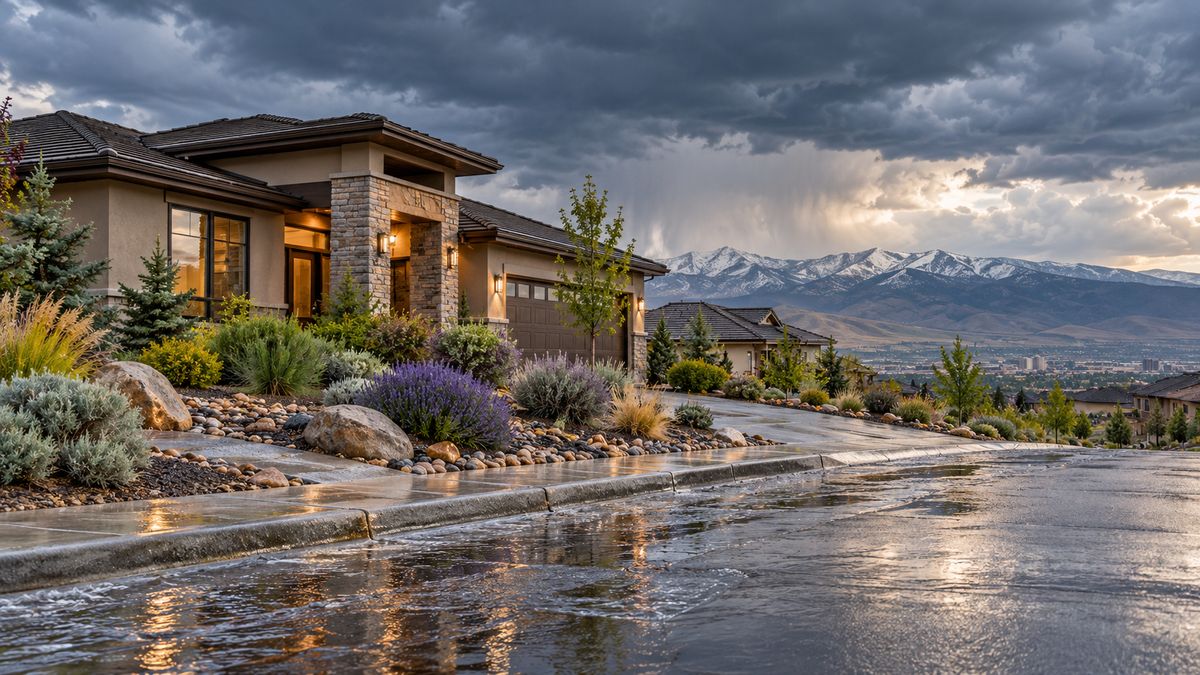
Flash floods, snowmelt and post-fire runoff can create water damage far from a river. Standard homeowners policies generally exclude flood damage, and NFIP coverage usually has a 30-day waiting period.
Northern Nevada is dry country. That does not make it flood-proof.
Heavy thunderstorms, fast runoff, snowmelt, burn scars and changing drainage can all put water where homeowners do not expect it. In June, the Nevada Division of Insurance pointed to flooding and mudslides in Washoe and Storey counties that affected nearly 100 homes as a reminder that flood losses are not just a coastal or riverfront problem.
The insurance surprise is just as important: standard homeowners policies generally do not cover flood damage.
A dry climate can create a different kind of flood risk
In Northern Nevada, the issue is often not days of steady rain. It can be intense precipitation over hard ground, runoff from higher terrain, snowmelt, post-fire conditions or drainage that cannot move water fast enough.
That means a home can face meaningful flood exposure even if it is not beside a river and even if the neighborhood rarely sees standing water.
The Nevada Division of Insurance tells homeowners to evaluate flood risk separately from their standard home policy. Flood coverage is available through the National Flood Insurance Program (NFIP), and some private insurers may also offer alternatives.
The 30-day waiting period changes the timing
A new NFIP policy usually does not become effective until 30 days after purchase. There are limited exceptions, so buying coverage after a storm is already approaching is generally not a workable plan.
That timing matters heading into a winter in which El Niño is strengthening. Federal forecasters say there is a greater than 90% chance of a very strong event during the 2026–27 fall and winter.
That forecast does not guarantee flooding in Reno, Sparks, Carson City or any individual neighborhood. It does make this a sensible time to understand your coverage before weather becomes urgent.
Flood, mudflow and earth movement are not interchangeable
Insurance language around water and soil movement can be confusing. NFIP flood insurance can cover direct physical loss from a qualifying flood and certain mudflow events, but landslides and other earth movement are generally treated differently.
Your homeowners policy may also respond to some water-related losses that are not “flood” under the policy—while excluding others.
The point is not to memorize insurance definitions. It is to ask your agent or insurer how your specific policies would respond to the risks around your property.
A flood zone is not the same thing as flood risk
FEMA maps are important, especially for mortgage requirements, but mapped zones do not capture every way water can reach a house. A property above a street can behave very differently from one below it. A new subdivision can change runoff patterns. A nearby burn scar can shed water and debris quickly. Snowmelt can combine with rain and overwhelm drainage in places that look dry most of the year.
If your home is outside a high-risk zone, that may affect the price or requirement for coverage. It does not mean the chance of flooding is zero.
NFIP is not the only option worth asking about
The NFIP is the best-known source of flood insurance, but some private insurers offer flood coverage with different limits, pricing, waiting periods or underwriting rules. Availability varies by property and carrier. If you are comparing options, ask the agent to show you the differences in writing rather than choosing on premium alone. The cheaper policy is not necessarily the better fit if its limits, deductibles or exclusions leave the loss you are most worried about uncovered.
Five questions to answer now
1. Does my homeowners policy cover flood damage? In most cases, the answer is no—but confirm it from your own policy.
2. What could move water toward my property? Consider slope, street drainage, washes, nearby burn areas, development, culverts and snowmelt—not just mapped flood zones.
3. What does FEMA show for my address? The Flood Map Service Center is a useful starting point, but it should not be your only risk check.
4. If I buy flood insurance, when does coverage begin? Ask about the standard waiting period and whether a private policy offers different terms.
5. Are the house and belongings both protected the way I expect? Building and contents protection are separate decisions under flood coverage.
Do the paperwork before the weather
The least useful time to discover an insurance exclusion is after water enters the house.
Take a few minutes now to review the declarations page, ask your insurer what is excluded, look at the property’s flood exposure and create a simple photo or video inventory of your home.
You may decide your existing protection is enough. You may decide additional coverage makes sense. Either way, the decision is better made before the forecast becomes an emergency.
Additional Resources
Verified resources for homeowners who want to go deeper:
· Nevada Division of Insurance — Flood Insurance
· Nevada Division of Insurance — Consumer Guide to Flood Insurance
· National Flood Insurance Program — Policy terms and 30-day waiting period